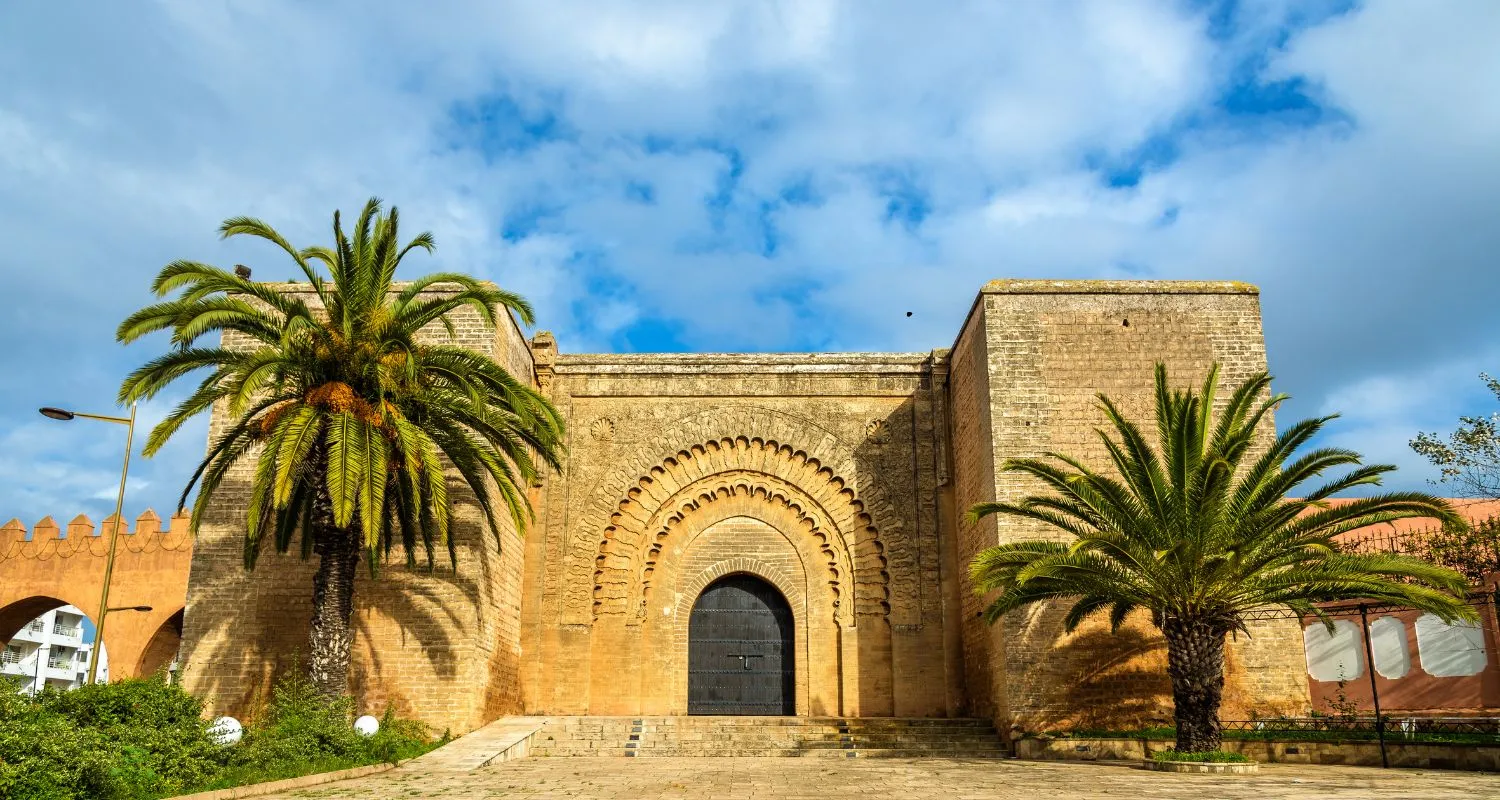
Bab Rouah Gate stands proudly in the Moroccan capital, Rabat, as a historical architectural landmark that tells the story of Morocco’s ancient history and its rich cultural and civilizational heritage. This gate is more than just a massive stone entrance; it is a living symbol of successive historical periods that left their mark on the city and Morocco as a whole. Tourists and those interested in history and art alike visit it for its rare symbolic and aesthetic value.
What Is Bab Rouah Gate?
Bab Rouah Gate is one of the main gates remaining from the old city walls of Rabat. It is one of the city’s most prominent historical landmarks. Its construction dates back to the 12th century AD, specifically during the reign of the Almohad Caliph Yaqub al-Mansur, one of the greatest rulers of the Almohad dynasty and a significant contributor to the construction and development of Rabat.
Bab Rouah Gate is a prime example of medieval Islamic military architecture. It was built as part of a defensive wall surrounding the city to protect it from sea and land invasions. Because Rabat was of great strategic importance overlooking the Atlantic Ocean, it enjoyed strong fortifications, and Bab Rouah Gate was one of its most prominent entrances.
Although its original function was defensive, its design reflects an artistic spirit that reflects the spirit of Islamic civilization, with inscriptions, arches, and delicate decorations adorning its facade. Today, Bab Rouah Gate is a tourist and artistic landmark visited by visitors from all over the world.
See also: Morocco Group Tours
What Does the Name Rouah Mean?
The name “Rouah” is linked to deep Arabic linguistic roots. It has more than one meaning depending on the context. In the case of Bab Rouah Gate, the name may carry a dual meaning that blends nature and spirituality:
- Natural significance: In a geographical context, the name “Al-Rawah” is likely derived from the Arabic word for “wind.” This is because the gateway’s location overlooking the Atlantic Ocean makes it constantly exposed to westerly winds.
- Linguistic significance: In a deeper linguistic and cultural dimension, it is also believed that the name Rouah* may be derived from the Arabic word “ruh,” meaning spirit or soul. This word carries high symbolism in Islamic and Arab culture, as it is associated with spiritual concepts, serenity, and contemplation.
What Architectural Style Characterizes the Gate?
Bab Rouah Gate is a magnificent embodiment of Almohad architecture, combining aesthetic power with defensive function:
- Engraved arches: The main arch features intertwined geometric and floral motifs, inspired by the Moorish-Andalusian style.
- Defensive towers: It has a double-entry gate in the middle, surrounded by two towers, the purpose of which was to enhance protection and provide observation points.
- Carved plaster: The portal’s facade is covered with fine carvings engraved on the plaster, highlighting the high level of craftsmanship during the Almohad period.
- Kufic inscriptions: Some inscriptions bear Kufic inscriptions that refer to the names of caliphs or verses from the Qur’an. This reflects the religious dimension of Islamic architecture.
See also: Morocco Luxury Tours
Are There Any Nearby Attractions to the Gate?
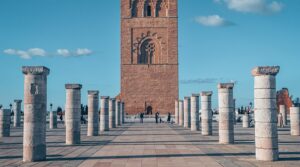
Yes, Bab Rouah Gate’s strategic location in Rabat makes it an excellent starting point for exploring the city’s attractions:
- Hassan Tower: One of Morocco’s most famous historical landmarks, it is a unique architectural and aesthetic icon that attracts visitors from all over the world.
- Mausoleum of Mohammed V: Featuring magnificent white marble architecture and delicate Islamic decorations, it reflects the great respect Moroccans have for their kings.
- Royal Palace of Rabat: The official residence of King Mohammed VI in Rabat. Although not open to the public, visiting it from the outside offers a glimpse into the Moroccan monarchy.
- Kasbah of the Udaias: A historic fortified neighborhood overlooking the Bouregreg River and the Atlantic Ocean. It features narrow alleys, white and blue houses reminiscent of Chefchaouen, and a beautiful Andalusian garden.
- Rabat Corniche and City Beach: An ideal place for strolling, exercising, or sitting in cafes overlooking the sea.
We’d love to have you with us, join the tour now and get your special discount!
In conclusion, Bab Rouah Gate is more than just an archaeological entrance in Rabat’s city walls; it is a gateway to a glorious past, a landmark that reflects Morocco’s historical and cultural depth. With its Almohad architecture, strategic location, and the role it played in Rabat’s history, this gate deserves to be an essential part of any cultural tour of Morocco.
Book your trip now and get ready to live a complete adventure and discover the magic of Morocco in all its details!
People Also Ask
Where Is Bab Rouah Gate Located?
Bab Rouah Gate is located in the Moroccan capital, Rabat, on the western side of the historic Almohad wall, near Nasr Street and next to the National Museum of Contemporary Arts.
When Was Bab Rouah Gate Built?
Bab Rouah Gate was built in the 12th century AD, during the reign of the Almohad Caliph Yaqub al-Mansur, who established Rabat as an important political and military center at the time.
Is the Gate Open to the Public Year-Round?
Yes, the gate is open year-round, and visitors can enter the exhibition hall inside, which hosts various artistic and cultural events.